
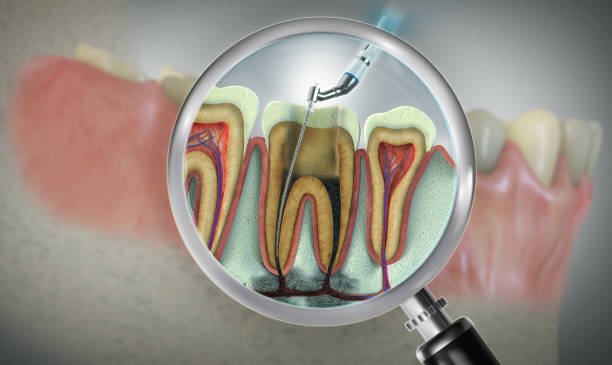
When tooth decay reaches the pulp, the living tissue inside a tooth can become inflamed, infected, or eventually die. Root canal treatment may be needed, but a deep cavity does not automatically mean the pulp cannot recover. At AZ Roots Endodontics in Chandler, AZ, Dr. Brandi Molina evaluates teeth with suspected pulp damage to help patients understand whether the tissue can be preserved or endodontic treatment is appropriate.
You may hear this described as decay “reaching the nerve.” The dental pulp actually contains nerves, blood vessels, and connective tissue. Its condition matters more than the size of the cavity alone.
Some teeth with deep decay remain suitable for a filling or pulp-preserving treatment. Others need treatment inside the roots to address diseased tissue. Understanding the difference begins with how decay moves through a tooth and how the pulp responds along the way.
How Does Tooth Decay Progress From a Cavity to the Dental Pulp?
How Tooth Decay Begins in the Enamel
Dental plaque is a sticky bacterial biofilm that collects on teeth. When certain bacteria use sugars from food and drinks, they produce acids that remove minerals from enamel, the tooth’s hard outer covering.
Early mineral loss may be stopped or reversed before a hole develops. Once enamel breaks down into a cavity, the lost structure cannot simply grow back. Enamel has no nerves, so early enamel decay often causes no discomfort.
What Happens When a Cavity Reaches the Dentin?
Beneath enamel lies dentin, a less heavily mineralized tissue containing microscopic channels called dentinal tubules. These channels connect the outer dentin with the region near the pulp.
A cavity reaching dentin brings irritation closer to the tooth’s living interior. Cold, heat, or sweets may begin to cause sensitivity. However, symptoms vary: deep dentin decay can develop without producing an obvious warning every time you eat or drink.
What Happens When Decay Reaches the Pulp Chamber?
The pulp chamber is the space inside the crown, or visible portion, of a tooth. It connects with the root canal system, the internal passages extending down the roots.
Inflammation changes blood flow and tissue pressure inside this relatively rigid enclosure. These changes can irritate nerves and, as disease advances, compromise tissue health. Decay approaching the chamber differs from pulp exposure, where the protective dentin barrier has been breached and the pulp communicates with the cavity or oral environment.
Can Bacteria Affect the Dental Pulp Before the Cavity Exposes It?
Yes. Bacterial products can move through dentinal tubules and trigger inflammation before a visible opening into the pulp develops. A remaining layer of dentin does not completely shield the pulp from irritation.
That does not mean every deep cavity has an infected pulp. The depth of decay, the remaining barrier, and the tissue’s response all influence what treatment may be appropriate.
What Happens to the Tooth Nerve When Decay Reaches the Pulp?
How the Dental Pulp Responds to Bacterial Irritation
The pulp has blood vessels, immune defenses, and cells that help protect the tooth. Its response to irritation includes inflammation, known as pulpitis.
Inflammation can make nerves more sensitive, but it does not always mean the tissue has lost its ability to heal. Removing or controlling the source of irritation and sealing the tooth may allow recovery in suitable cases.
What Is Reversible Pulpitis?
Reversible pulpitis describes inflammation that is expected to settle when its cause is treated. For example, a tooth may react briefly to cold and become comfortable again soon after the cold is removed.
That pattern is only one clue. Similar sensitivity can have other causes, and a dentist must assess the tooth before deciding that a restoration alone will be enough.
What Is Irreversible Pulpitis?
Irreversible pulpitis traditionally describes a clinical diagnosis in which the inflamed pulp is not expected to recover with routine restorative treatment alone. Lingering thermal pain or pain without an obvious trigger may support this diagnosis.
Some affected teeth have little pain. Also, this diagnosis does not mean every part of the pulp is equally damaged. Modern vital pulp therapy may preserve remaining healthy tissue in selected teeth; other teeth need root canal treatment. Clinical findings guide that distinction.
What Happens When the Tooth Pulp Dies?
Pulp necrosis means that pulp tissue has died. The tooth may stop responding normally to cold as nerve function is lost, even though bacteria can remain inside the canals.
The surrounding ligament, bone, and gum tissues are still alive. Disease around the root can therefore cause pain or swelling even when the pulp itself no longer senses temperature. Reduced sensitivity does not establish that the tooth has recovered.
What Are the Signs That a Deep Cavity Has Reached the Tooth Nerve?
Symptoms can suggest pulp involvement, but they cannot show exactly where decay ends or how much healthy tissue remains. Several signs you may need a root canal overlap with other dental problems.
Lingering Sensitivity to Hot or Cold
Brief sensitivity fades quickly after a trigger ends. Lingering discomfort continues after the drink, food, or cold stimulus is gone and can raise concern about more significant inflammation.
During an evaluation, your description of how long discomfort lasts helps the clinician interpret testing. There is no reliable home stopwatch rule that determines whether you need a root canal.
Spontaneous or Throbbing Tooth Pain
Pain that starts without chewing or temperature changes can occur with pulpal inflammation. Episodes may interrupt sleep or make it difficult to identify one particular tooth.
Throbbing describes a sensation rather than a diagnosis. Your endodontist still needs to connect the symptom pattern with examination findings.
Pain When Biting or Chewing
Biting tenderness may develop when inflammation affects the tissues supporting the root. These tissues respond to pressure even if the pulp has died.
Cracks, an uneven bite, and gum problems can also cause chewing pain. A tooth that hurts under pressure needs evaluation rather than an assumption about the nerve.
A Deep Cavity With Little or No Pain
Some teeth develop advanced decay quietly. Others become less sensitive as pulp tissue loses function.
Neither a comfortable day nor the absence of severe pain rules out disease. A deep cavity found during a dental examination deserves attention even when you can chew normally.
Swelling, a Gum Bump, or Drainage Near the Tooth
A gum bump or drainage may reflect an infection associated with the root. Swelling can also arise from other dental conditions, so the source needs to be identified.
Spreading facial swelling or fever with a worsening dental infection requires urgent assessment. Difficulty breathing or swallowing warrants immediate emergency medical care.
Can Deep Tooth Decay Reach the Pulp Without Causing Pain?
Yes. Tooth decay without pain is possible, including decay associated with serious pulp damage. Gradual progression and differences in how teeth respond mean there is no dependable pain level that marks when the pulp becomes involved.
A tooth with necrotic pulp may have less thermal sensitivity because its nerves no longer function normally. Another tooth may still contain living, inflamed tissue without noticeable symptoms. Neither situation can be distinguished reliably at home.
Examination, pulp testing, and imaging can reveal concerns before dramatic symptoms appear. If your dentist identifies a deep cavity, “it doesn’t hurt” is useful information, but it is not proof that the pulp is healthy or that treatment can wait.
How Does an Endodontist Determine Whether Decay Has Damaged the Pulp?
Reviewing Tooth Pain, Sensitivity, and Symptom History
Your endodontist asks when symptoms began, what triggers them, and how long they last. Pain at rest, sleep disruption, and previous fillings or crowns also help establish the history.
Tell the clinician if pain recently stopped, too. A changing pattern can be relevant even when you feel comfortable at the appointment.
Examining the Depth of Decay and Remaining Tooth Structure
The examination considers decay, existing restorations, possible cracks, and the amount of sound tooth remaining. Gum support and the ability to place a durable restoration matter alongside pulp health.
Sometimes the full extent of decay or a crack becomes clearer only during treatment. Your clinician may need to explain how those findings could change the original plan.
Cold Testing and Other Pulp Sensibility Tests
Cold testing checks whether and how a tooth responds to a controlled stimulus, often compared with nearby teeth. Electric pulp testing may provide additional information about nerve response.
These are sensibility tests: they assess neural responses rather than directly measuring pulp blood circulation. A response does not prove the entire pulp is healthy, and a missing response must be interpreted in context.
Dental X-Rays and Signs of Disease Around the Root
Dental X-rays help assess decay, existing dental work, and tissues around the roots. They may reveal changes suggesting disease near the root tip.
However, radiographs cannot directly show whether pulp tissue is inflamed or capable of healing. Early pulp disease may produce no visible changes around the root, and two-dimensional images have limits in showing a cavity’s exact depth.
Why One Test Cannot Always Confirm Whether the Pulp Is Healthy
The clinician combines your history with examination findings, sensibility tests, pressure tests, and imaging. Unclear findings sometimes require reassessment rather than an immediate definitive label.
A pulpal diagnosis describes the condition inside the tooth. A periapical diagnosis describes the tissues around the root tip. Considering both helps determine what endodontic treatment, if any, is appropriate.
Can a Tooth Be Saved When Decay Reaches the Pulp?
Often, treatment can preserve the tooth. Whether it can also preserve living pulp depends on tissue condition, the extent of damage, and whether a lasting restoration is possible.
When a Filling or Restoration May Be Enough
If the pulp remains recoverable, managing the decay and placing a well-sealed restoration may be sufficient. The plan must address the cavity while protecting the remaining tissue.
For selected deep lesions, selective caries removal leaves some affected dentin near the pulp to reduce exposure risk while preparing the surrounding tooth for an effective seal. This is a deliberate clinical technique, with appropriate follow-up, rather than a reason to leave an untreated cavity open.
Can Vital Pulp Therapy Preserve the Tooth Nerve?
Vital pulp therapy aims to maintain living pulp tissue. Depending on the findings, it may involve pulp capping or a pulpotomy, which removes part or all of the pulp in the crown while preserving suitable tissue within the roots.
These approaches can be considered in selected permanent teeth, including some with pulp exposure. Tissue condition, contamination control, the ability to manage bleeding, and a durable restoration influence suitability. These are general treatment possibilities; an evaluation is needed to discuss options and provider availability.
When Root Canal Treatment Becomes Necessary
Root canal treatment may be recommended when the pulp is necrotic or cannot be predictably preserved. It addresses disease inside the canal system while retaining the outer tooth when it is restorable.
For someone considering root canal treatment in Chandler, AZ, the recommendation should follow a diagnosis rather than cavity depth alone. Ask what the findings show and why the proposed approach fits your tooth.
When a Tooth May Be Too Damaged to Restore
A tooth can be endodontically treatable yet lack enough sound structure for a dependable restoration. Certain fractures or inadequate periodontal support may also limit its prognosis.
Saving a natural tooth includes planning how it will function after treatment. If that cannot be achieved predictably, extraction may need consideration.
What Happens If Bacteria Spread Beyond the Dental Pulp?
How Infection Can Extend Through the Root Canal System
When bacteria colonize necrotic tissue, the root canal system can become a continuing source of irritation and infection. Bacteria and their products may pass through openings near the root tip and affect surrounding tissues.
This extends the problem beyond the original cavity. Treatment must address the source inside the tooth as well as consider the surrounding response.
What Is Apical Periodontitis?
Apical periodontitis is inflammation of the tissues around the root tip. It can cause tenderness to biting or tapping, but it can also occur without noticeable discomfort.
Imaging may show associated bone changes, although these are not always visible early. Apical periodontitis is not the same as an abscess: inflammation does not automatically mean a pocket of pus has formed.
Can Deep Decay Lead to a Dental Abscess?
Yes. Some infections progress to an abscess, a localized collection of pus. Possible signs include swelling, pressure, tenderness, or drainage through a small gum opening.
An abscess is not an inevitable result of every deep cavity. If one develops, drainage or temporary symptom relief does not establish that the source has been eliminated.
Why Treating the Source of Infection Matters
Antibiotics do not repair a cavity or reliably eliminate bacteria within an infected root canal system. Definitive dental treatment addresses that source.
Antibiotics may be appropriate when infection spreads, systemic symptoms develop, or individual medical circumstances warrant them. They are not routinely required for every painful tooth. Our discussion of root canal treatment versus antibiotics explains their different roles.
Does Deep Tooth Decay Always Require Root Canal Treatment?
No. Deep decay describes the location and extent of a lesion; the treatment also depends on pulp health and restorability.
| Clinical Situation | Possible Treatment Direction |
|---|---|
| Deep Decay with a Recoverable Pulp | Conservative restorative or pulp-preserving care |
| Selected Pulp Exposure with Suitable Tissue Conditions | Vital pulp therapy may be considered |
| Irreversible Pulpal Disease | Root canal treatment may be recommended; selected vital teeth may have pulp-preserving options |
| Pulp Necrosis | Root canal treatment may preserve a restorable tooth |
| Tooth Cannot Be Predictably Restored | Extraction may need consideration |
This table illustrates treatment directions, not a way to diagnose yourself. Symptoms alone cannot place a tooth into one of these categories.
How Does Root Canal Treatment Save a Tooth With Deep Decay?
Removing Diseased or Necrotic Pulp
Root canal treatment removes diseased or dead tissue from the pulp chamber and root canals. Local anesthesia is used to help keep treatment comfortable.
The goal is to address internal disease while preserving the tooth structure that can support a restoration.
Cleaning, Disinfecting, and Sealing the Root Canals
The clinician cleans and shapes the canals, uses disinfecting solutions, and fills and seals the prepared spaces. This reduces the bacterial burden and helps prevent renewed contamination.
Follow-up assesses healing. The exact treatment plan depends on the tooth’s anatomy and clinical condition.
Restoring the Tooth After Root Canal Therapy
The final restoration protects remaining structure and helps seal the tooth against saliva and bacteria. Your restoring dentist determines whether a filling, crown, or another restoration is appropriate.
Complete that step on the recommended schedule. Until the tooth is definitively restored, follow instructions about chewing and protecting any temporary restoration.
Why Saving the Natural Tooth Is Often Worth Considering
A successfully treated and restored tooth can continue supporting chewing and normal function. A mature tooth can function without living pulp because surrounding tissues continue to support it.
The value of preservation depends on a realistic prognosis, a suitable restoration, and ongoing care. No treatment can guarantee that every damaged tooth will last indefinitely.
Can a Deep Cavity Become a Dental Emergency?
Yes. Severe uncontrolled pain, new swelling, or a worsening infection warrants urgent dental assessment. Contact a dentist or endodontist promptly rather than waiting for a routine checkup.
Fever or feeling unwell alongside dental swelling raises concern about systemic involvement. Spreading facial or neck swelling needs urgent assessment, especially if it is worsening quickly.
Difficulty breathing or swallowing requires immediate emergency medical care. Emergency assessment may manage the immediate threat, but follow-up dental treatment is still necessary to address the tooth’s source of infection.
How Can Patients Prevent Deep Decay From Reaching the Dental Pulp?
Regular dental examinations help identify cavities before symptoms become obvious. Recommended imaging and timely restorative care can help prevent a small problem from becoming an internal tooth problem.
Brush twice daily with fluoride toothpaste, clean between teeth, and limit frequent sugary snacks and drinks. Ask your general dentist whether additional fluoride or changes related to dry mouth would be useful for your decay risk.
Keep recommended follow-up appointments after treatment for deep decay. A restoration’s seal and the pulp’s response both deserve attention over time.
Root Canal Evaluation for Deep Tooth Decay in Chandler, AZ
A referral for deep decay means the tooth needs a closer assessment; it does not establish the final treatment. An endodontist evaluates pulp health and the tissues around the roots to determine whether root canal treatment is appropriate.
At AZ Roots Endodontics, Dr. Brandi Molina provides specialized care focused on preserving natural teeth. Bring your questions about the diagnosis, alternatives, and restoration needs so you can understand what the recommendation means for your tooth.
Frequently Asked Questions About Deep Tooth Decay and the Dental Pulp
How do you know if a cavity has reached the nerve?
Lingering sensitivity, spontaneous pain, or swelling can raise concern, but none confirms pulp exposure. A dentist combines examination, imaging, and pulp testing to assess the tooth. Sometimes the exact relationship between decay and the pulp becomes clearer during treatment. A painless tooth can still need care.
Can a deep cavity heal without a root canal?
A deep cavity may be treatable without a root canal if the pulp remains recoverable or suitable for vital pulp therapy. However, a hole caused by decay does not grow back. It generally needs professional decay management and restoration; brushing or fluoride alone cannot rebuild the missing structure.
Does pulp exposure always mean root canal treatment?
No. Selected exposed pulps may be treated with pulp capping or pulpotomy. The clinician considers the remaining tissue, contamination, bleeding control, and the ability to seal and restore the tooth. Other exposures require root canal treatment. Exposure alone does not provide enough information to select an approach.
Can tooth decay reach the pulp without pain?
Yes. Deep decay and pulp disease can occur without obvious pain, and thermal sensitivity may decrease when pulp tissue dies. A lack of symptoms does not establish whether the tissue is healthy, inflamed, or necrotic. Clinical testing and imaging help distinguish conditions that may feel similar at home.
Can a tooth nerve recover after deep decay?
Living pulp can sometimes recover when irritation is controlled and the tooth is appropriately sealed. In selected cases, vital pulp therapy preserves remaining healthy tissue. Necrotic pulp does not recover through a routine filling or antibiotic course. Your clinician determines which situation is most consistent with the findings.
What is the difference between pulpitis and pulp necrosis?
Pulpitis means inflammation of living pulp tissue. Pulp necrosis means that tissue has died. Both can be associated with deep decay, but their symptoms may overlap or be absent. Endodontic testing helps assess the internal tissue, while a separate evaluation considers inflammation or infection around the root.
Can antibiotics treat a cavity that has reached the pulp?
Antibiotics cannot restore decayed tooth structure or replace treatment of diseased pulp. They may be added when infection spreads or systemic symptoms develop, depending on the patient’s health and clinical findings. A dentist must still address the underlying source through the appropriate restorative or endodontic treatment, or extraction when necessary.
Can a tooth be saved if the nerve has died?
Often, yes. Root canal treatment can remove necrotic tissue, disinfect the canal system, and allow a restorable tooth to remain in function. The outlook also depends on remaining structure, fractures, gum support, and the final restoration. A dead pulp does not automatically mean the tooth must be removed.
Can a dental X-ray show whether decay reached the pulp?
An X-ray can show the apparent depth of decay and changes around the root, but it cannot directly show pulp inflammation or healing potential. Images also have limits in revealing exact cavity boundaries. Dentists interpret them with symptoms, examination, and pulp testing rather than using an image alone.
When should I see an endodontist for a deep cavity?
An endodontic evaluation may be appropriate when your dentist suspects pulp involvement, you have persistent or lingering symptoms, or the diagnosis is uncertain. A referral can help clarify whether the pulp can be preserved. New swelling or severe uncontrolled pain calls for urgent assessment rather than a routine appointment.
Schedule an Endodontic Evaluation in Chandler, AZ
If you have been told you have deep decay, pulp exposure, or may need a root canal, an evaluation can clarify your options. Dr. Brandi Molina and the team at AZ Roots Endodontics in Chandler, AZ, focus on preserving natural teeth through specialized endodontic care.
Learn about root canal treatment or schedule an endodontic evaluation to discuss your tooth and the next step in your care.
